How to Verify Someone's Identity Before Meeting in Person
The gap between profile and person
You've been texting for a week. The conversation is great. You're starting to picture a real future with this person.
But here's the thing: you've never actually verified any of it. The name, the age, the job, the city — everything you know comes from one source: them.
That's not a reason to panic. Most people are honest. But it is a reason to do a few simple checks before you meet a stranger in person. Here's a practical, respectful guide to verifying someone's identity without making it weird.
What you can verify for free
Their name and digital footprint
If someone is a real, employed adult in the modern world, they leave traces. Search their full name alongside their city and employer:
- LinkedIn — does a profile exist with matching details? Most working adults have one.
- Google — news mentions, professional registrations, conference talks, even old school alumni pages.
- Public social media — Instagram, Facebook, X. Do these match the person you've been talking to?
A total absence of any digital footprint for an employed adult is worth a question. Not a verdict — but a question.
Their photos
Reverse image search their profile photos. If the same face appears under a different name, on a stock photo site, or in a scam-warning database, you have your answer.
This takes ten seconds and catches a surprising number of fakes.
Their phone number
If you have their number, a simple search can sometimes surface the registered name or location. It won't always work — but when it does, it should match what they told you.
The verification that requires more
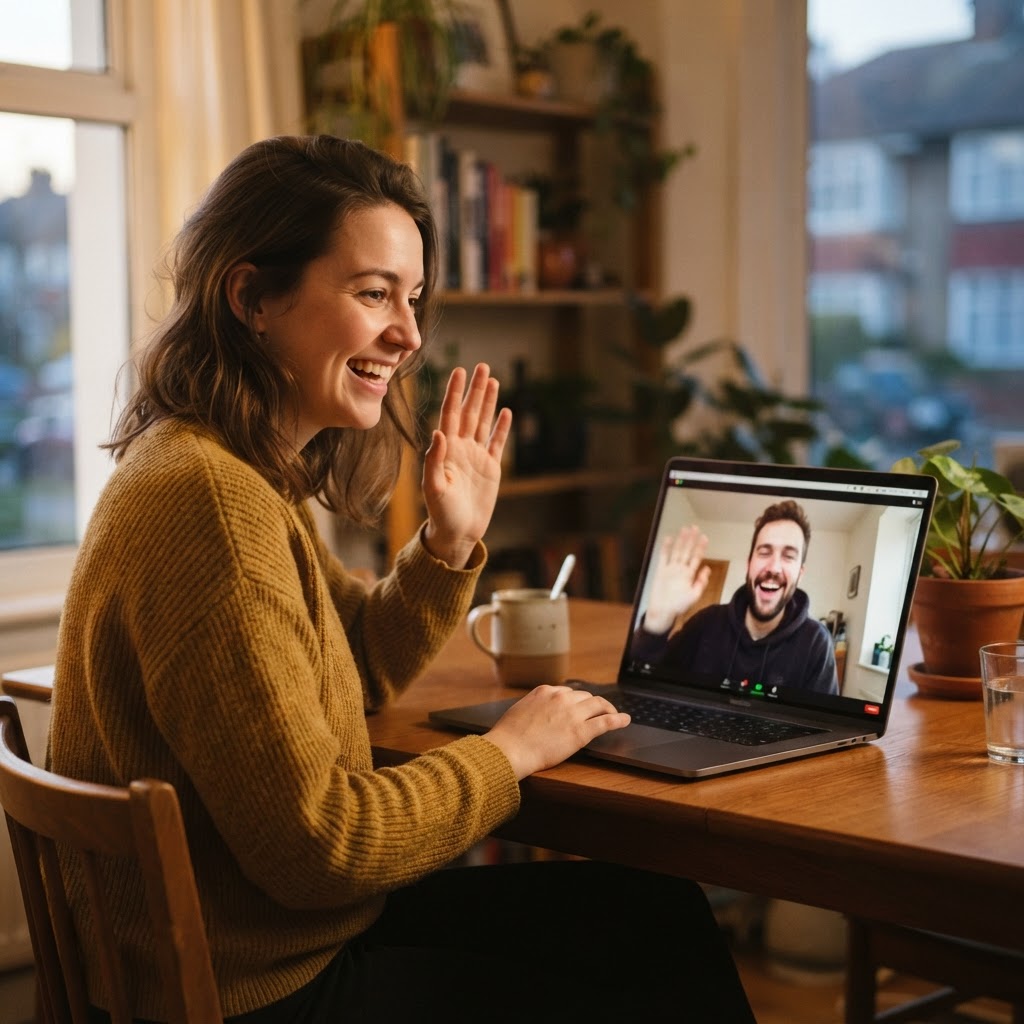
A live video call
This is the single most important check, and it's free. A video call confirms three things no photo or text can:
- The face is real and matches the photos.
- The person is alive (not a stolen identity being run by someone else).
- They're willing to show you — which itself is a green flag.
If they refuse, repeatedly, with escalating excuses — that refusal is information. Treat it as such.
Public records
If you want to go further, public records can confirm or contradict key claims:
- Age — some jurisdictions have searchable records that can corroborate a date of birth.
- Marriage and divorce — to check whether they're actually single, as claimed.
- Address history — to see whether they've really lived where they say.
- Professional licenses — for doctors, lawyers, real estate agents, and others, licensing boards are often public and searchable.
The catch: public records are scattered across thousands of jurisdictions, often inconsistent, and easy to misread. A name match isn't always a person match. This is where a structured verification report earns its keep — it does the cross-referencing for you.
How to verify without being weird
You don't have to announce "I'm running a background check on you." That kills the mood and the trust. Instead:
- Frame it as mutual. "Hey, before we meet, want to do a quick video call? I like to see who I'm talking to." Most people will say yes — and the ones who won't are telling you something.
- Ask for small, natural specifics. "What's your last name?" "Where did you go to school?" These come up in normal conversation. The answers should be instant and consistent.
- Let your own searches be silent. There's nothing wrong with quietly looking someone up. You're not invading their privacy — you're protecting your safety.
What verification can and can't tell you
It can tell you: the person exists, is roughly the age they claim, lives where they say, isn't publicly married, and their photos are genuine.
It can't tell you: whether they're a good person, whether they'll treat you well, whether the relationship will work. A clean record is a floor, not a ceiling. It means "no known disqualifying facts" — not "guaranteed safe."
And it can't tell you what isn't recorded. A person with no public red flags may still be manipulative, dishonest, or unsafe in ways that never made it into any database.
The honest framing
Verifying someone isn't about suspicion. It's about the same caution you'd apply to any stranger you're letting into your life — the same caution you'd want them to apply to you.
A good verification respects the person being checked: it uses lawful public sources, it doesn't notify them, and it reports what was found honestly — including what wasn't found.
If you're ready to meet and want certainty first, VerifyMyDate compiles identity, photo, and public-record research into one private report.
Want us to verify your date?
VerifyMyDate compiles public records, identity checks and photo intelligence into one private, evidence-based report. The person you search is never notified.
Check Someone Now — $19.99